

Landing Page vs. Homepage: What’s the Difference?
Introduction
When building a business website, two of the most important pages are the homepage and the landing page. While they may appear similar at first glance, they serve very different purposes. Understanding the difference between these two pages is essential for improving user experience, increasing conversions, and maximizing the effectiveness of your digital marketing campaigns.
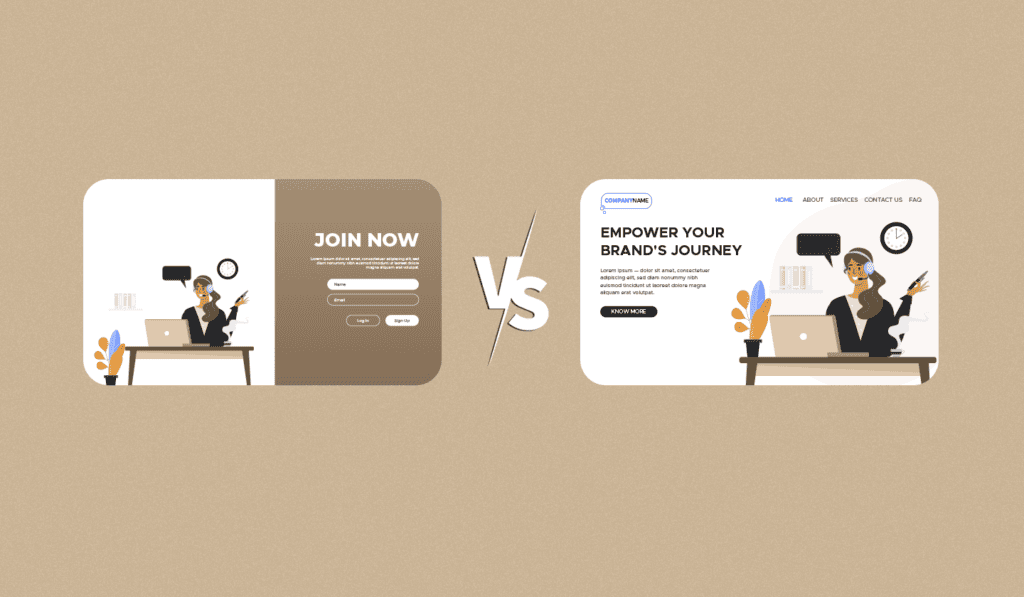
A homepage introduces visitors to your business and provides access to various sections of your website. A landing page, on the other hand, is designed with one specific goal—encouraging visitors to take a single action, such as requesting a quote, signing up for a newsletter, or making a purchase.
Knowing when to use each page can help businesses generate more leads, improve marketing performance, and increase sales.
What Is a Homepage?
A homepage is the main entry point of your website. It provides an overview of your business, products, services, and brand while guiding visitors to different sections of your site.
A typical homepage includes:
- Company introduction
- Navigation menu
- Featured services or products
- About Us section
- Customer testimonials
- Latest blog posts
- Contact information
- Calls-to-action
- Footer with important links
The homepage is designed to serve a broad audience with different interests and needs.
What Is a Landing Page?
A landing page is a standalone webpage created for a specific marketing campaign or conversion goal.
Visitors usually arrive on a landing page through:
- Google Ads
- Social media advertisements
- Email marketing campaigns
- Search engine results
- Promotional links
- Online advertisements
Unlike a homepage, a landing page focuses on one offer and one call-to-action (CTA), minimizing distractions to encourage conversions.
Homepage vs. Landing Page: Key Differences
| Feature | Homepage | Landing Page |
|---|---|---|
| Purpose | Introduces the business and provides overall website navigation | Focuses on a single marketing goal or offer |
| Navigation | Includes full website navigation | Often has limited or no navigation to reduce distractions |
| Audience | General visitors | Visitors from specific campaigns or promotions |
| Content | Covers multiple topics, services, or products | Focuses on one product, service, or offer |
| Call-to-Action | Multiple CTAs | One primary CTA |
| Goal | Help visitors explore the website | Encourage immediate action and conversions |
Purpose of a Homepage
The homepage acts as the digital front door of your business.
Its goals include:
- Introducing your company
- Building brand awareness
- Showcasing services
- Providing website navigation
- Helping visitors learn about your business
- Directing users to relevant pages
Because it serves many purposes, a homepage typically contains a variety of content.
Purpose of a Landing Page
A landing page has one clear objective.
Examples include:
- Request a free quote
- Book a consultation
- Purchase a product
- Download an eBook
- Register for an event
- Subscribe to a newsletter
Everything on the page is designed to support that single conversion goal.
When Should You Use a Homepage?
A homepage is ideal when visitors need to:
- Learn about your business
- Browse multiple services
- Explore products
- Read company information
- Access different website sections
- Navigate to blog posts or resources
Every business website should have a well-designed homepage that provides a clear overview of what the company offers.
When Should You Use a Landing Page?
Landing pages are most effective for marketing campaigns where you want visitors to complete one specific action.
Common uses include:
- Google Ads campaigns
- Facebook and Instagram ads
- Email marketing campaigns
- Seasonal promotions
- Product launches
- Lead generation campaigns
- Event registrations
- Free consultations
A focused landing page often converts better than sending visitors to a general homepage.
Why Landing Pages Usually Convert Better
Landing pages eliminate distractions and guide users toward a single action.
Benefits include:
- Clear messaging
- One call-to-action
- Simplified design
- Focused content
- Faster decision-making
- Higher conversion rates
By reducing unnecessary choices, visitors are more likely to complete the desired action.
Essential Elements of a Homepage
A strong homepage typically includes:
Clear Brand Introduction
Explain who you are and what your business offers.
Navigation Menu
Help visitors easily find important pages.
Featured Services or Products
Highlight your most important offerings.
Trust Signals
Include testimonials, certifications, reviews, or awards.
Calls-to-Action
Guide visitors toward relevant pages or services.
Contact Information
Make it easy for customers to get in touch.
Essential Elements of a Landing Page
An effective landing page should include:
Compelling Headline
Clearly communicate the offer.
Strong Value Proposition
Explain why visitors should choose your business.
Benefit-Focused Content
Show how your solution solves a problem.
Trust Signals
Use testimonials, reviews, or client logos.
Simple Lead Form
Collect only the information you need.
Clear Call-to-Action
Encourage visitors to take one specific action.
SEO Differences Between Homepages and Landing Pages
Both page types contribute to your SEO strategy, but they serve different roles.
Homepage SEO
Focuses on:
- Brand-related keywords
- Primary business services
- Company information
- Website authority
Landing Page SEO
Focuses on:
- Specific keywords
- Targeted services
- Local SEO (when applicable)
- Conversion-focused content
Optimizing both page types helps improve your overall online visibility.
Common Mistakes to Avoid
Homepage Mistakes
- Cluttered design
- Confusing navigation
- Too much information
- Weak calls-to-action
- Slow loading speed
- Poor mobile optimization
Landing Page Mistakes
- Multiple offers on one page
- Too many navigation links
- Long, complicated forms
- Weak headlines
- Missing trust signals
- Unclear calls-to-action
Avoiding these issues helps improve user experience and conversion rates.
Can You Use Both Together?
Absolutely. In fact, most successful businesses use both strategically.
A common approach is:
- The homepage introduces your business and helps visitors explore your website.
- Landing pages are created for specific services, promotions, or advertising campaigns.
For example, a visitor who finds your business through Google Search may first visit your homepage, while someone clicking on a Google Ads campaign may be directed to a dedicated landing page tailored to that advertisement.
Using both pages together creates a more effective marketing strategy.
Benefits of Using the Right Page for the Right Purpose
Choosing the appropriate page helps businesses:
- Improve user experience
- Increase conversion rates
- Generate more qualified leads
- Improve advertising performance
- Reduce bounce rates
- Increase online sales
- Strengthen brand credibility
- Maximize marketing ROI
Each page serves a unique role in helping visitors move through the customer journey.
Conclusion
Although homepages and landing pages may look similar, they are designed for different purposes. A homepage introduces your business, provides navigation, and helps visitors explore your website, while a landing page is built to achieve one specific conversion goal with focused messaging and a clear call-to-action.
Understanding the difference allows businesses to create a better user experience, improve marketing performance, and increase sales. By using your homepage to build trust and dedicated landing pages to support targeted campaigns, you can attract the right audience, generate more leads, and achieve stronger results from your online marketing efforts.
