

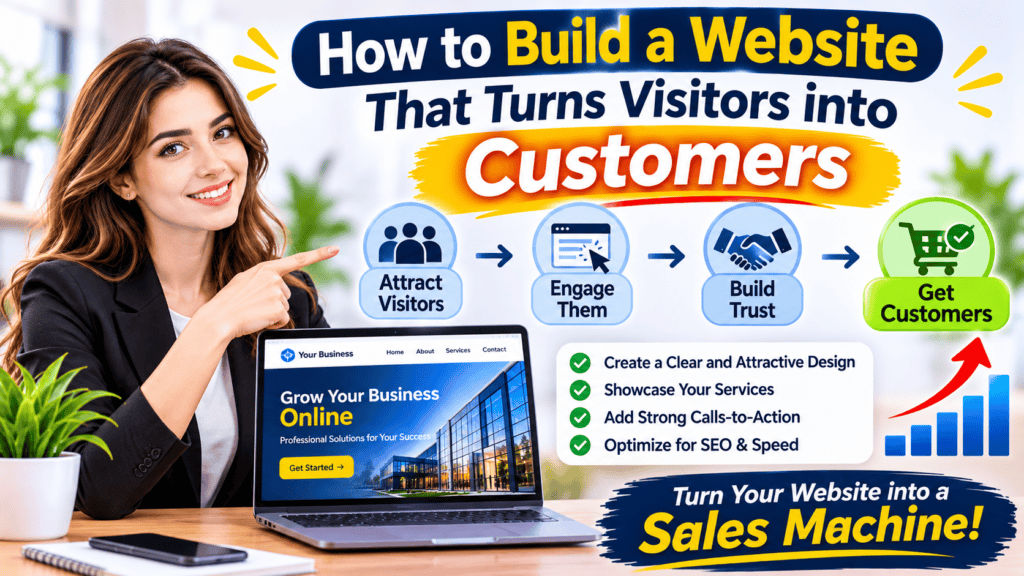
How to Build a Website That Turns Visitors into Customers
Having a website is an important step toward growing your business online, but simply attracting visitors is not enough. The real goal is to turn those visitors into potential customers who contact your business, request a quote, or purchase your products and services.
Many businesses invest in website design but struggle to generate leads and sales. This often happens because their websites are not designed with customer needs and conversion goals in mind.
A website should do more than look attractive. It should communicate your business value, build trust, provide useful information, and make it easy for visitors to take action.
Whether you run a small business, a service-based company, or an online store, building a conversion-focused website can help you get more value from your online presence.
In this article, we’ll explain how to build a website that turns visitors into customers.
1. Start With a Clear Website Goal
Before designing your website, decide what you want visitors to do.
Different businesses have different goals. For example:
- A plumbing company may want visitors to request service appointments.
- A roofing company may want customers to request free estimates.
- A construction company may want potential clients to schedule consultations.
- An online store may want visitors to purchase products.
- A consulting business may want visitors to book discovery calls.
When your website has a clear goal, you can organize its design and content around encouraging visitors to take that action.
Avoid trying to promote too many different things on one page. Focus on the most important action you want visitors to complete.
2. Create a Professional First Impression
Your website is often the first interaction potential customers have with your business.
If it looks outdated, cluttered, or poorly designed, visitors may question your company’s credibility.
A professional website should have:
- A clean and modern layout.
- Consistent brand colors.
- Readable fonts.
- High-quality images.
- Proper spacing between sections.
- Clear headings and content.
- Easy-to-use navigation.
You do not need complicated animations or excessive design elements. A simple and professional design can communicate your message more effectively.
Remember, visitors should understand what your business offers within a few seconds of landing on your homepage.
3. Write a Clear and Compelling Homepage Headline
Your homepage headline is one of the most important pieces of content on your website.
It should immediately explain what your business does and how it helps customers.
For example, instead of using a general headline such as:
“Welcome to Our Website”
Use something more specific:
“Professional Roofing Services You Can Rely On”
Or:
“Reliable Plumbing Solutions for Your Home and Business”
A strong headline should communicate your main service and the value customers can expect.
You can also add a short supporting description explaining your experience, service areas, or key benefits.
4. Make Your Website Mobile-Friendly
Many people use smartphones to search for businesses, compare services, and make purchasing decisions.
If your website does not work properly on mobile devices, you could lose potential customers.
A mobile-friendly website should include:
- Responsive layouts.
- Readable text.
- Easy-to-click buttons.
- Simple navigation menus.
- Properly sized images.
- Mobile-friendly contact forms.
- Clickable phone numbers.
Test your website on different screen sizes to make sure visitors can navigate it comfortably.
A smooth mobile experience makes it easier for customers to explore your services and contact your business.
5. Make Your Website Load Quickly
Website speed is important for both user experience and website performance.
Visitors may leave if your website takes too long to load, especially when they are browsing from mobile devices or slower internet connections.
Some common causes of slow website loading include:
- Large image files.
- Too many unnecessary plugins.
- Poor hosting.
- Unoptimized scripts and code.
- Lack of caching.
- Excessive website animations.
To improve website speed, optimize images, use reliable hosting, enable caching, and remove unnecessary elements.
You can use Google PageSpeed Insights to identify performance issues and find ways to improve your website.
6. Add Clear Calls to Action (CTAs)
A call to action tells visitors what they should do next.
Without clear calls to action, visitors may explore your website and leave without contacting your business.
Use action-oriented buttons that encourage visitors to take the next step.
Examples include:
- Request a Free Quote.
- Contact Us Today.
- Get Started.
- Schedule a Consultation.
- Shop Now.
- Call Now.
Place these buttons in important areas, such as your homepage, service pages, and website header.
Make sure the wording is clear and the buttons are easy to find.
7. Build Trust With Customer Reviews and Testimonials
Trust is an important factor in purchasing decisions.
Before choosing a business, many customers want to know whether other people have had positive experiences with its products or services.
Adding genuine customer testimonials can help build confidence.
You can include:
- Customer feedback.
- Verified online reviews.
- Previous project experiences.
- Before-and-after photographs.
- Case studies.
- Customer success stories.
For example, a construction company can showcase completed projects and genuine feedback from satisfied clients.
Make sure all reviews and testimonials are authentic. Honest customer experiences are more valuable than exaggerated marketing claims.
8. Showcase Your Services Clearly
Visitors should quickly understand what your business offers.
If your services are difficult to find or poorly explained, potential customers may become confused and leave.
Create dedicated service pages that explain:
- What each service includes.
- Who the service is for.
- What problems it solves.
- Why customers may need it.
- How customers can request more information.
For example, a plumbing business might have separate pages for drain cleaning, water heater installation, emergency plumbing, and pipe repairs.
Organizing your services into clear sections helps visitors find exactly what they need.
9. Make Contacting Your Business Easy
One of the biggest mistakes businesses make is hiding their contact information.
If visitors are interested in your services, they should be able to contact you without searching through multiple pages.
Include:
- A visible phone number.
- A professional email address.
- A simple contact form.
- Your business location or service areas.
- Click-to-call functionality on mobile devices.
- Links to relevant social media profiles.
Keep your contact forms simple. Request only the information you actually need.
For most businesses, a name, email address, phone number, and short message are enough to start a conversation.
10. Use High-Quality Images and Videos
Visual content can help visitors understand your products, services, and business more easily.
A website filled with poor-quality or irrelevant images may look unprofessional.
Instead, use visual content that supports your message.
Examples include:
- Product photographs for online stores.
- Completed project images for construction businesses.
- Team photographs for service companies.
- Demonstration videos for products and services.
- Before-and-after images for renovation businesses.
Whenever possible, use genuine photographs of your actual work.
Also, optimize images and videos so they do not negatively affect website loading speed.
11. Optimize Your Website for Search Engines
A conversion-focused website also needs visitors.
Search Engine Optimization (SEO) helps improve your website’s visibility in search engines and creates opportunities to attract people searching for your products or services.
Important SEO practices include:
- Targeting relevant keywords.
- Writing useful website content.
- Creating descriptive page titles.
- Optimizing meta descriptions.
- Using proper heading structures.
- Adding descriptive image alt text.
- Building relevant internal links.
- Improving website loading performance.
For local businesses, local SEO is particularly important.
Create location-specific content where appropriate and keep your business information accurate across online platforms.
Remember that SEO takes time, and ranking improvements are not guaranteed.
12. Create a Simple and User-Friendly Navigation System
Your website should make it easy for visitors to find important information.
Complicated navigation can frustrate users and make it harder for them to explore your services.
A simple menu might include:
- Home.
- About Us.
- Services.
- Projects.
- Blog.
- Contact Us.
Use clear labels and organize related information logically.
Your most important pages should be easy to access from the homepage.
The easier your website is to navigate, the easier it becomes for visitors to find the information they need.
13. Use Landing Pages for Specific Services
A landing page is a focused webpage designed to encourage visitors to take a particular action.
Instead of sending all visitors to your homepage, you can create dedicated landing pages for individual services or marketing campaigns.
For example:
A roofing company could create separate landing pages for:
- Roof Installation.
- Roof Repair.
- Roof Replacement.
- Roof Inspection.
Each page can include a clear headline, service information, genuine customer reviews, relevant photographs, and a quote request button.
This approach helps visitors find information that matches what they are looking for.
14. Track Website Performance and Improve It
Building a website is not the end of the process.
You should regularly review how visitors interact with your website and identify opportunities for improvement.
Tools such as Google Analytics and Google Search Console can help you understand website performance.
You can monitor:
- Website traffic.
- Most visited pages.
- Traffic sources.
- Search queries.
- Contact form submissions.
- User engagement.
- Conversion rates.
For example, if your homepage receives significant traffic but generates very few inquiries, you may need to improve its headline, service presentation, or calls to action.
Regular testing and improvements can help your website become more effective over time.
Essential Features of a Website That Converts Visitors
Before launching your business website, make sure it includes these important elements:
- Professional and modern design.
- Clear homepage headline.
- Mobile-friendly layout.
- Fast loading speed.
- Easy navigation.
- Clearly presented services.
- Genuine customer testimonials.
- Strong calls to action.
- Simple contact forms.
- High-quality images.
- Search engine optimization.
- Secure HTTPS connection.
- Website analytics and performance tracking.
These features create a strong foundation for a website that supports your business goals.
Final Thoughts
A successful business website is not simply about having an attractive design. It is about creating an experience that helps visitors understand your business, trust your services, and take action.
From professional design and mobile responsiveness to clear calls to action and helpful content, every element should work together to guide visitors toward becoming customers.
If your current website receives visitors but generates very few inquiries, it may be time to review its design, content, performance, and user experience.
Small improvements can make a meaningful difference in how people interact with your business online.
Ready to Build a Website That Helps Your Business Grow?
At Adeel Web Solutions, we help businesses build professional, modern, and responsive websites designed around their business goals.
Our services include:
- Professional Website Design.
- WordPress Website Development.
- Custom Website Development.
- eCommerce Website Development.
- Website Redesign.
- Website Speed Optimization.
- Website Maintenance and Support.
Whether you need a brand-new website or want to improve your existing one, we can help you create a professional online presence.
