
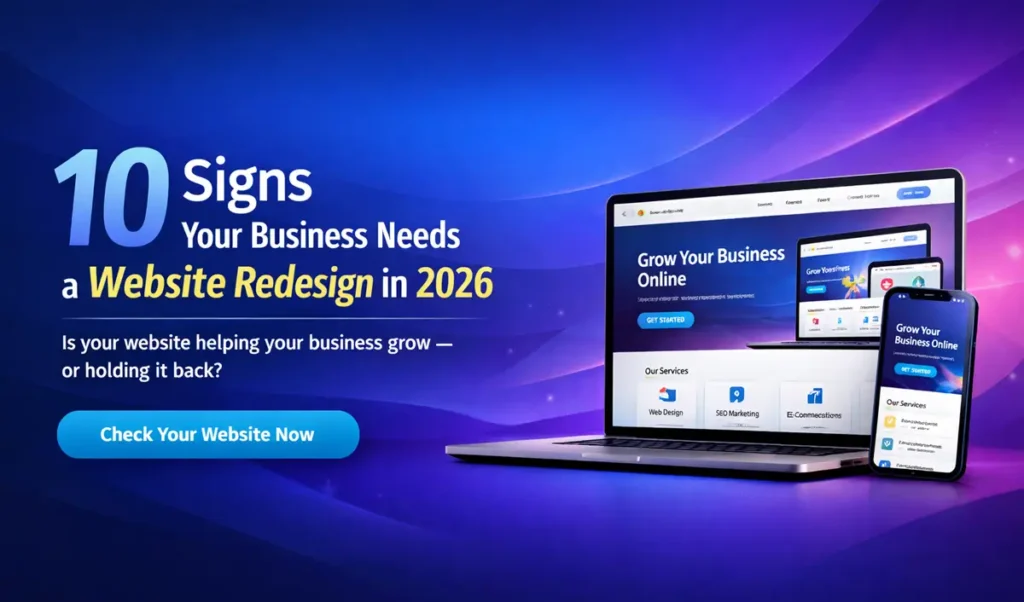
10 Signs Your Website Needs a Redesign
Introduction
Your website is often the first interaction potential customers have with your business. It serves as your online storefront, represents your brand, and plays a key role in generating leads and sales. However, as technology, design trends, and customer expectations evolve, even a once-modern website can become outdated.
An old or underperforming website can hurt your credibility, frustrate visitors, and reduce your search engine rankings. If your website isn’t delivering the results you expect, it may be time for a redesign.
In this article, we’ll discuss 10 clear signs your website needs a redesign and explain how updating your website can improve user experience, increase conversions, and support long-term business growth.
Why Website Redesign Matters
A website redesign is more than giving your site a fresh look. It involves improving design, functionality, performance, usability, and overall user experience.
A modern website can help you:
- Build trust with potential customers
- Improve search engine rankings
- Increase lead generation
- Boost online sales
- Enhance mobile usability
- Strengthen your brand image
- Improve website performance
A redesign ensures your website continues to meet both user expectations and business goals.
1. Your Website Looks Outdated
First impressions matter.
If your website looks like it was built years ago, visitors may question the professionalism of your business.
Signs of an outdated design include:
- Old-fashioned layouts
- Small fonts
- Poor color choices
- Low-quality images
- Inconsistent branding
- Cluttered pages
A modern, clean design helps create a positive first impression and builds credibility.
2. Your Website Isn’t Mobile-Friendly
More than half of all web traffic comes from mobile devices.
If visitors struggle to use your website on smartphones or tablets, you’re likely losing potential customers.
Common mobile issues include:
- Tiny text
- Buttons that are difficult to tap
- Horizontal scrolling
- Slow loading
- Broken layouts
A responsive website provides a smooth experience on every screen size.
3. Slow Loading Speed
Visitors expect websites to load quickly.
Slow websites often experience:
- Higher bounce rates
- Lower conversion rates
- Reduced customer satisfaction
- Poorer search rankings
Common causes include:
- Large image files
- Outdated code
- Too many plugins
- Poor hosting
- Unoptimized scripts
Improving website performance is one of the biggest benefits of a redesign.
4. Difficult Navigation
Visitors should be able to find information quickly.
If users struggle to navigate your website, they may leave before taking action.
Signs of poor navigation include:
- Confusing menus
- Too many navigation options
- Hidden important pages
- Broken links
- Poor page organization
Simple navigation improves both user experience and conversions.
5. Low Conversion Rates
If your website receives traffic but generates few leads or sales, the design may be part of the problem.
Common conversion issues include:
- Weak calls-to-action
- Poor landing pages
- Long contact forms
- Confusing layouts
- Lack of trust signals
A redesigned website can guide visitors more effectively toward becoming customers.
6. Your Branding Has Changed
Businesses evolve over time.
If your logo, colors, messaging, or services have changed but your website hasn’t, your online presence may no longer reflect your brand.
A redesign ensures consistency across:
- Logo
- Colors
- Typography
- Messaging
- Images
- Overall visual identity
Consistent branding builds recognition and trust.
7. Poor Search Engine Performance
An outdated website may not follow modern SEO best practices.
Common SEO problems include:
- Missing meta tags
- Poor heading structure
- Slow page speed
- Non-responsive design
- Weak internal linking
- Outdated content
A redesign provides an opportunity to improve technical SEO and search visibility.
8. High Bounce Rate
A high bounce rate means visitors leave your website without exploring additional pages.
Possible causes include:
- Slow loading speed
- Poor design
- Weak content
- Difficult navigation
- Mobile usability issues
- Irrelevant landing pages
Improving the user experience encourages visitors to stay longer and interact with your website.
9. Your Website Is Difficult to Update
Older websites often rely on outdated technology or complicated content management systems.
If making simple updates requires significant time or technical expertise, your website may need modernization.
A redesigned website should allow you to:
- Publish blog posts
- Update services
- Replace images
- Edit content
- Add new pages
- Manage SEO settings
A user-friendly content management system saves time and improves efficiency.
10. Security and Maintenance Problems
Older websites are often more vulnerable to security risks.
Warning signs include:
- Outdated software
- Unsupported plugins
- Frequent errors
- Broken functionality
- SSL certificate issues
- Security vulnerabilities
A redesign provides the opportunity to update your website with modern security standards and improved reliability.
Additional Benefits of a Website Redesign
A professionally redesigned website can also help you:
- Improve accessibility
- Increase customer trust
- Support digital marketing campaigns
- Improve page speed
- Enhance user engagement
- Generate more qualified leads
- Increase online sales
- Improve overall website performance
A redesign is an investment in your business’s long-term success.
Common Mistakes to Avoid During a Redesign
When redesigning your website, avoid these common mistakes:
- Ignoring SEO
- Removing valuable content
- Forgetting mobile optimization
- Overcomplicating navigation
- Using too many animations
- Failing to test performance
- Not creating clear calls-to-action
- Neglecting page speed
- Forgetting to set up redirects for changed URLs
Careful planning helps ensure a successful transition.
Best Practices for a Successful Website Redesign
To maximize results:
- Define clear business goals.
- Understand your target audience.
- Keep branding consistent.
- Prioritize mobile responsiveness.
- Improve page loading speed.
- Optimize for search engines.
- Create clear calls-to-action.
- Simplify navigation.
- Use high-quality visuals.
- Test the website before launch.
A strategic redesign delivers better performance than focusing on appearance alone.
How Often Should You Redesign Your Website?
There is no fixed schedule, but many businesses consider a redesign every 2 to 5 years, depending on:
- Changes in technology
- Business growth
- Industry trends
- Customer expectations
- Website performance
- Branding updates
Even if a full redesign isn’t necessary, regularly updating content, improving functionality, and maintaining security are essential for keeping your website competitive.
Business Benefits of a Modern Website
A redesigned website can deliver measurable business benefits, including:
- Better user experience
- Higher search engine rankings
- Increased organic traffic
- More qualified leads
- Higher conversion rates
- Improved customer trust
- Stronger brand image
- Better return on marketing investment
A modern website becomes a valuable asset that supports every aspect of your digital marketing strategy.
Conclusion
Your website should be a powerful tool for attracting visitors, building trust, and generating business. If it looks outdated, loads slowly, performs poorly on mobile devices, or struggles to convert visitors into customers, it may be time for a redesign.
Recognizing these 10 signs your website needs a redesign can help you make informed decisions before performance declines further. By investing in a modern, user-friendly, and SEO-optimized website, you’ll create a stronger online presence, improve customer engagement, and position your business for long-term growth.
