

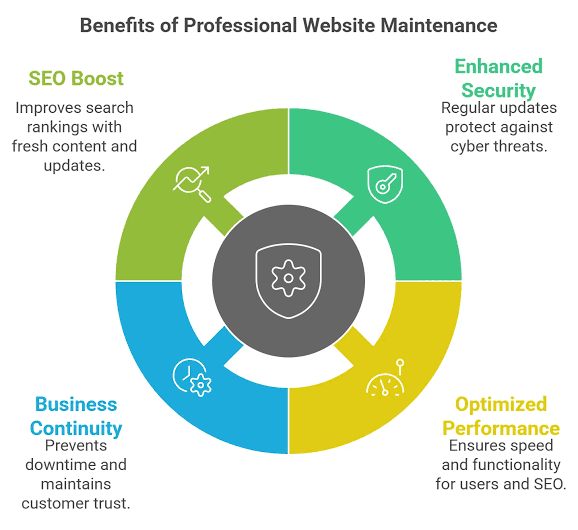
The Benefits of Ongoing Website Monitoring and Security
Introduction
A business website is one of its most valuable digital assets. It serves as a marketing tool, a sales platform, a customer service resource, and often the first impression potential customers have of your business. However, simply launching a website is not enough. To keep it performing reliably, businesses must continuously monitor and secure it against evolving threats.
Cyberattacks, software vulnerabilities, server issues, and unexpected technical problems can occur at any time. Without ongoing monitoring and security, these issues may go unnoticed until they begin affecting visitors, search engine rankings, or business operations.
Implementing continuous website monitoring and security helps detect problems early, protect sensitive information, reduce downtime, and ensure your website remains a trusted and reliable resource for your customers.
What Is Website Monitoring?
Website monitoring is the continuous process of checking your website’s health, performance, availability, and functionality.
Professional website monitoring typically includes:
- Website uptime monitoring
- Performance tracking
- Security monitoring
- Error detection
- Broken link monitoring
- SSL certificate monitoring
- Server resource monitoring
- Form and checkout testing
The goal is to identify issues before they impact visitors or your business.
What Is Website Security?
Website security involves protecting your website, server, and customer data from cyber threats, unauthorized access, malware, and other online risks.
Website security includes:
- Firewall protection
- Malware scanning
- Security updates
- User authentication
- Data encryption
- Backup management
- Access control
- Vulnerability assessments
Together, these measures help safeguard your website and maintain customer trust.
Why Ongoing Website Monitoring and Security Matter
Technology and cyber threats are constantly evolving. A website that is secure today may become vulnerable tomorrow if it is not regularly monitored and maintained.
Ongoing monitoring and security help businesses:
- Detect problems early
- Reduce security risks
- Improve website reliability
- Maintain customer confidence
- Protect business data
- Support long-term website performance
Proactive management is far more effective than responding after problems occur.
Key Benefits of Ongoing Website Monitoring and Security
1. Detects Problems Before Visitors Notice
One of the biggest advantages of continuous monitoring is early detection.
Monitoring tools can quickly identify:
- Website downtime
- Slow page loading
- Server failures
- Database errors
- Broken functionality
- Plugin conflicts
By resolving issues early, businesses can minimize disruptions and maintain a positive user experience.
2. Protects Against Cyber Threats
Hackers continuously search for vulnerable websites.
Ongoing security helps defend against threats such as:
- Malware infections
- Brute force login attacks
- SQL injection attempts
- Cross-site scripting (XSS)
- Distributed Denial-of-Service (DDoS) attacks
- Unauthorized access
Regular monitoring allows businesses to respond quickly before significant damage occurs.
3. Improves Website Uptime
Downtime can result in lost customers, missed sales, and reduced credibility.
Continuous monitoring checks whether your website is available around the clock.
If a problem occurs, administrators can receive alerts immediately and begin resolving the issue before it significantly impacts users.
Reliable uptime improves customer confidence and business continuity.
4. Keeps Customer Data Safe
Many websites collect valuable customer information, including:
- Contact details
- Login credentials
- Order history
- Payment information
- Appointment requests
Strong security practices help protect this sensitive data through:
- Encryption
- Secure authentication
- Access controls
- Regular security updates
- Continuous monitoring
Protecting customer information is essential for maintaining trust and protecting your business reputation.
5. Prevents Expensive Security Incidents
Recovering from a cyberattack can be both costly and time-consuming.
Potential consequences include:
- Data recovery expenses
- Website restoration
- Emergency developer support
- Lost business revenue
- SEO recovery
- Reputation damage
Preventive monitoring and security are far less expensive than recovering from a major security breach.
6. Improves Website Performance
Website monitoring does more than detect outages—it also tracks performance.
Regular monitoring can identify:
- Slow-loading pages
- High server usage
- Large image files
- Database inefficiencies
- Resource bottlenecks
Addressing these issues improves loading speed and provides a better user experience.
7. Supports Better Search Engine Rankings
Search engines favor websites that are:
- Secure
- Fast
- Reliable
- Mobile-friendly
Ongoing monitoring helps maintain these qualities by identifying technical issues before they negatively affect SEO.
Consistent performance helps improve visibility in search results and supports long-term organic traffic growth.
8. Ensures Software Remains Secure
Content management systems, plugins, themes, and server software frequently release updates to improve security and performance.
Ongoing maintenance ensures:
- Security patches are installed
- Software remains compatible
- Vulnerabilities are fixed
- New features are implemented
Keeping software current significantly reduces the risk of attacks.
9. Verifies Critical Website Features
Your website may appear to be working while important features have quietly failed.
Monitoring regularly checks:
- Contact forms
- Shopping carts
- Checkout systems
- Login pages
- Booking forms
- Search functionality
- Payment processing
Ensuring these features work properly prevents lost leads and missed sales opportunities.
10. Builds Customer Trust
Visitors expect websites to be secure and reliable.
A well-maintained website demonstrates professionalism by providing:
- Secure browsing
- Fast performance
- Accurate information
- Reliable functionality
- Consistent availability
Customers are more likely to trust businesses whose websites function smoothly and protect their personal information.
Essential Website Monitoring Activities
A comprehensive monitoring strategy should include:
Uptime Monitoring
Checks whether your website is available 24/7.
Performance Monitoring
Tracks loading speed and server response times.
Security Monitoring
Scans for malware, suspicious activity, and vulnerabilities.
SSL Certificate Monitoring
Ensures your SSL certificate remains valid and secure.
Backup Monitoring
Verifies that backups are completed successfully and can be restored if needed.
Error Monitoring
Identifies technical issues before they affect users.
Website Security Best Practices
To maintain a secure website, businesses should:
- Install software updates regularly.
- Use strong passwords.
- Enable multi-factor authentication.
- Limit administrator access.
- Monitor login activity.
- Perform regular malware scans.
- Back up website files and databases.
- Use HTTPS encryption.
- Remove unused plugins and themes.
- Review user permissions periodically.
Following these practices significantly improves website security.
Common Risks of Ignoring Website Monitoring
Without ongoing monitoring and security, businesses may experience:
- Website downtime
- Malware infections
- Data breaches
- Broken forms
- Declining search rankings
- Slow website performance
- Customer complaints
- Lost sales
- Damaged reputation
- Expensive emergency repairs
Most of these issues can be prevented through proactive monitoring.
Why Professional Website Monitoring Is Worth the Investment
Professional website monitoring provides peace of mind by ensuring experienced experts continuously monitor your website’s health.
Benefits include:
- Faster issue detection
- Improved security
- Better website performance
- Reduced downtime
- Ongoing technical support
- Reliable backups
- Enhanced SEO performance
- Greater customer confidence
Businesses can focus on growth while professionals manage the technical aspects of website maintenance.
Conclusion
Ongoing website monitoring and security are essential for maintaining a safe, reliable, and high-performing online presence. Rather than waiting for problems to disrupt your business, continuous monitoring helps detect issues early, strengthen security, and improve overall website performance.
From protecting customer data and preventing cyberattacks to reducing downtime and supporting better search engine rankings, proactive website monitoring delivers long-term value for businesses of all sizes.
By investing in ongoing website monitoring and security, businesses can protect their digital assets, build customer trust, and ensure their websites remain secure, efficient, and ready to support future growth.
