

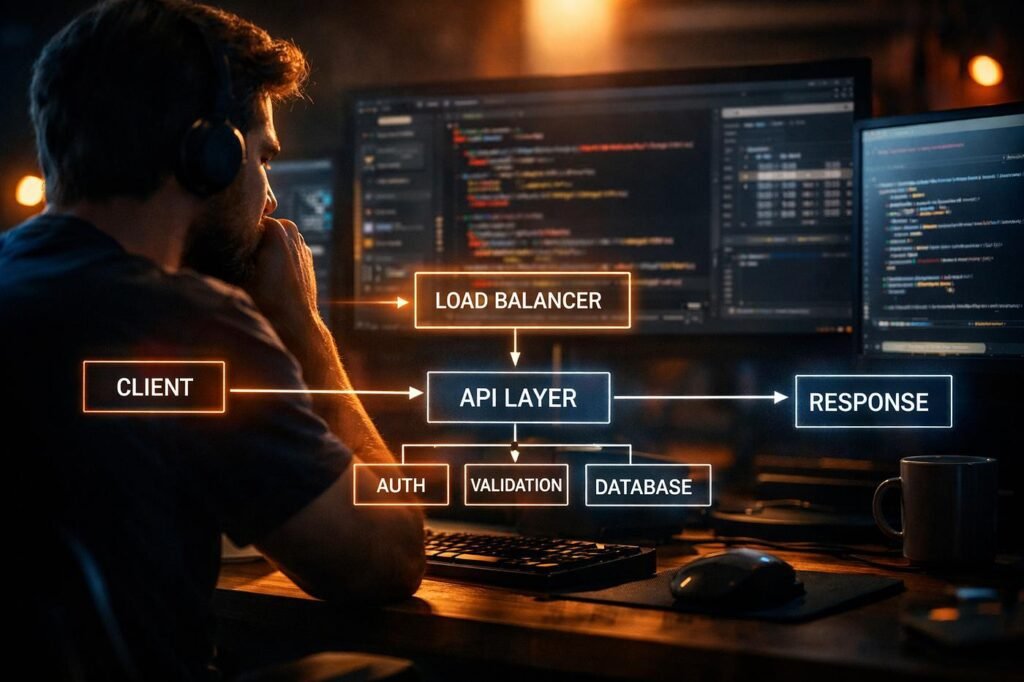
What Backend Development Does Behind the Scenes of Your Website
Introduction
When you visit a website, you see the design, images, menus, buttons, and content that make up the user interface. This visible part of a website is known as the frontend. However, behind every smooth user experience is a powerful system working silently in the background—the backend.
Backend development is responsible for the functionality that users don’t see but rely on every time they interact with a website. Whether someone logs into an account, submits a contact form, purchases a product, or searches for information, backend development makes these actions possible.
Without a well-built backend, even the most visually appealing website would not function properly. It is the engine that powers your website, processes data, communicates with databases, and keeps everything running securely and efficiently.
What Is Backend Development?
Backend development involves building and maintaining the server-side components of a website or web application. It focuses on the systems that process requests, manage data, and ensure that everything works as expected behind the scenes.
Backend developers create the logic that allows websites to perform tasks such as:
- User authentication
- Database management
- Payment processing
- Content management
- Form handling
- File uploads
- API integrations
- Security and data protection
While users interact with the frontend, the backend handles the heavy lifting that keeps the website functional.
The Main Components of Backend Development
A backend system typically consists of three core components:
1. Server
The server receives requests from users and processes them before sending the appropriate response back to the browser.
For example, when a visitor clicks the “Login” button, the server checks the submitted information and decides whether access should be granted.
2. Database
A database stores all the information a website needs to function.
Examples of stored data include:
- Customer accounts
- Product catalogs
- Blog posts
- Orders
- Contact form submissions
- Booking information
- User preferences
The backend retrieves, updates, and organizes this data whenever users interact with the website.
3. Application Logic
Application logic contains the rules that determine how a website behaves.
- Whether login credentials are correct
- Which products should appear in search results
- How shipping costs are calculated
- Whether a payment has been completed
- Which content should be displayed to each user
This logic ensures that every website feature works correctly.
How Backend Development Works Behind the Scenes
1. Processing User Requests
Every action a visitor performs sends a request to the backend.
Examples include:
- Logging into an account
- Searching for products
- Submitting a contact form
- Booking an appointment
- Adding items to a shopping cart
The backend processes each request and returns the appropriate information within seconds.
2. Managing Website Databases
Most modern websites rely on databases to store important information.
Backend development manages tasks such as:
- Saving customer information
- Updating inventory
- Retrieving blog content
- Recording purchases
- Managing appointments
Efficient database management ensures users receive accurate and up-to-date information.
3. Handling User Authentication
Many websites require users to create accounts or log in securely.
Backend systems verify user credentials by:
- Checking usernames and passwords
- Managing user sessions
- Protecting account information
- Preventing unauthorized access
Secure authentication helps protect both businesses and customers.
4. Processing Online Payments
E-commerce websites rely heavily on backend development for secure payment processing.
The backend communicates with payment gateways to:
- Verify transactions
- Process payments
- Generate invoices
- Update order status
- Notify customers
This process happens almost instantly while keeping sensitive financial information secure.
5. Supporting Dynamic Website Content
Unlike static websites, dynamic websites display content that changes based on user activity or stored data.
Examples include:
- Personalized dashboards
- Product recommendations
- Shopping carts
- Customer accounts
- News feeds
- Booking systems
Backend development makes these dynamic features possible by retrieving and updating data in real time.
6. Connecting Third-Party Services
Modern websites often integrate with external services to expand functionality.
Backend developers connect websites with tools such as:
- Payment gateways
- Email marketing platforms
- CRM systems
- Social media platforms
- Analytics tools
- Cloud storage services
- Shipping providers
These integrations allow businesses to automate workflows and improve efficiency.
7. Improving Website Security
Security is one of the most important responsibilities of backend development.
Backend systems help protect websites through:
- Data encryption
- Secure authentication
- Access controls
- Firewall integration
- Spam prevention
- Input validation
- Protection against malicious attacks
Strong backend security safeguards sensitive customer information and builds trust.
8. Optimizing Website Performance
Backend development also contributes to website speed and reliability.
Performance improvements include:
- Efficient database queries
- Server optimization
- Data caching
- Load balancing
- Resource management
A well-optimized backend ensures websites remain responsive even during periods of high traffic.
Common Backend Technologies
Backend developers use various programming languages and frameworks depending on project requirements.
Popular backend technologies include:
- PHP
- Python
- Node.js
- Java
- C#
- Ruby
Common databases include:
- MySQL
- PostgreSQL
- MongoDB
- Microsoft SQL Server
These technologies work together to power websites and web applications of all sizes.
Backend Development and Frontend Development
Frontend and backend development work together to create a complete website.
Frontend Development
- Creates the visual interface
- Handles user interactions
- Builds responsive layouts
- Improves user experience
Backend Development
- Processes requests
- Stores and retrieves data
- Manages security
- Handles business logic
- Supports integrations
A successful website requires both frontend and backend systems working together seamlessly.
Benefits of Professional Backend Development
Investing in professional backend development provides long-term business benefits, including:
- Faster website performance
- Secure customer data
- Reliable website functionality
- Easier scalability
- Better system stability
- Improved user experience
- Seamless third-party integrations
A strong backend provides the foundation needed for websites to grow alongside a business.
Why Backend Development Is Essential for Business Success
As businesses become more dependent on digital platforms, backend development becomes increasingly important. Customers expect websites to work flawlessly, load quickly, and protect their personal information.
A reliable backend enables businesses to:
- Deliver personalized experiences
- Automate business processes
- Handle increasing website traffic
- Process online transactions securely
- Provide consistent performance
Without a dependable backend, even the best-designed website cannot deliver the functionality users expect.
Conclusion
Backend development is the unseen force that powers every functional website. While visitors interact with the frontend, the backend processes requests, manages databases, secures information, and keeps everything running smoothly behind the scenes.
From handling user accounts and processing payments to supporting dynamic content and improving website performance, backend development is essential for creating reliable and scalable digital experiences.
By investing in professional backend development, businesses can build secure, high-performing websites that support growth, enhance customer satisfaction, and deliver dependable online services.
