


If you’ve spent any time researching how to rank higher on Google, you’ve probably come across the terms on-page SEO and off-page SEO. Most businesses treat them like two separate conversations — something to tackle one at a time. But in 2026, the line between the two has never been more connected, and understanding how they complement each other is exactly what separates businesses that dominate search results from those that never make it to page one.
Whether you’re a Charlotte-based contractor trying to outrank your competitors in the Google Maps pack, a growing e-commerce brand looking to drive organic traffic, or a professional services firm that wants to be found when potential clients search online — this guide is for you.
Let’s break down what on-page vs. off-page SEO actually mean, how each one works in today’s search landscape, and which one you should be investing in right now.
What Is On-Page SEO?

On-page SEO refers to everything you do directly on your own website to help search engines understand your content and rank it accordingly. It’s the foundation of your entire SEO strategy — and without it, even the best off-page work in the world won’t move the needle.
Think of on-page SEO as making sure your website speaks Google’s language clearly.
Key On-Page SEO Elements in 2026
Title Tags and Meta Descriptions
Every page on your website should have a unique title tag that includes your primary keyword and accurately describes what the page is about. Meta descriptions don’t directly affect rankings, but they influence click-through rates — which do matter. A well-written meta description tells the searcher exactly why they should click your result over the ten others on the same page.
Header Structure (H1, H2, H3)
Search engines use header tags to understand the hierarchy and structure of your content. Your H1 should include your target keyword and clearly communicate the page’s primary topic. Subheadings (H2s and H3s) help break content into scannable sections while signaling to Google the range of subtopics your page covers.
Keyword Optimization
In 2026, keyword stuffing is not just ineffective — it’s actively harmful. Modern on-page SEO is about using your primary keyword naturally throughout the content, including related terms and semantic variations that Google associates with the topic. Search engines now understand context, not just exact phrases.
Content Quality and Depth
Google’s Helpful Content system, which has been rolling out and evolving since 2022, prioritizes content that genuinely serves the reader’s intent. Thin, generic content no longer ranks. In 2026, pages that rank consistently are those that answer the user’s question fully, demonstrate real expertise, and go beyond surface-level information.
Internal Linking
Linking to other relevant pages within your own website helps search engines crawl and index your site more effectively. It also passes “link equity” between pages and keeps visitors engaged longer — both of which improve your overall SEO performance.
Image Optimization
Every image on your site should have a descriptive file name and alt text. This helps Google understand what the image shows and contributes to overall on-page relevance. It also improves accessibility and can drive additional traffic through Google Image Search.
Page Experience Signals
Core Web Vitals — Google’s set of metrics measuring loading speed, interactivity, and visual stability — remain a confirmed ranking factor in 2026. Pages that load slowly, shift content around as they load, or respond sluggishly to user input will rank lower than faster, cleaner competitors.
For a deeper technical breakdown of how to optimize your site’s performance, check out our Technical SEO Checklist for High-Performing Websites.
What Is Off-Page SEO?
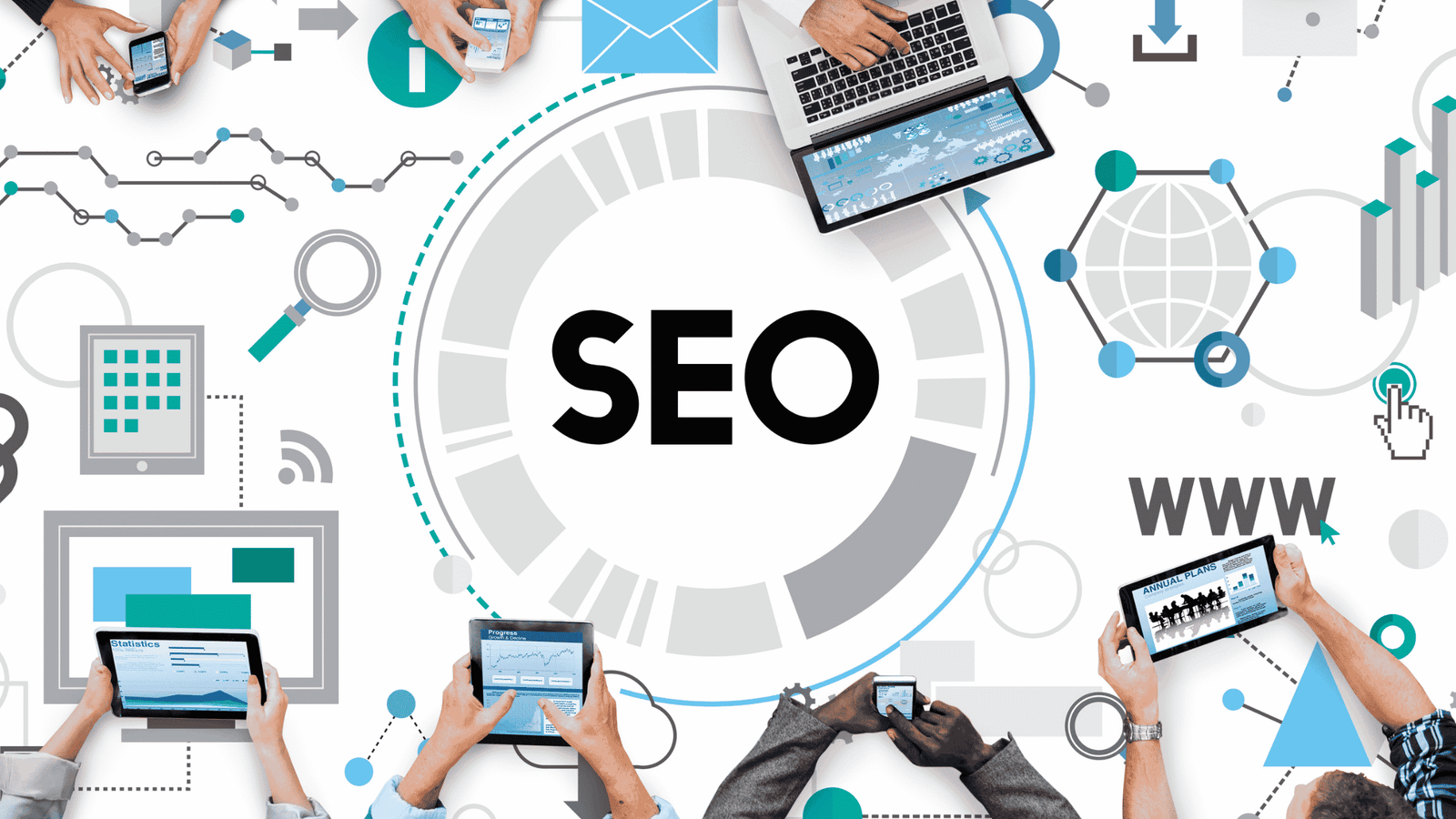
Off-page SEO refers to everything that happens outside your website that influences how Google perceives your authority, credibility, and trustworthiness. If on-page SEO tells Google what your site is about, off-page SEO tells Google whether your site deserves to be trusted.
The most important off-page SEO signal has always been backlinks — links from other websites pointing to yours. But in 2026, off-page SEO encompasses far more than just link building.
Key Off-Page SEO Elements in 2026
Backlink Profile
A backlink from another website is essentially a vote of confidence. Google interprets links from high-authority, relevant websites as a signal that your content is credible and valuable. Not all backlinks are equal — a single link from a respected industry publication is worth far more than dozens of links from low-quality directories.
The focus in 2026 is on earning quality links, not manufacturing quantity. This means creating content worth linking to, building genuine relationships with publishers and journalists, and pursuing digital PR strategies that place your brand in front of relevant audiences.
Google Business Profile and Local Citations
For local businesses — especially those in competitive markets like Charlotte, NC — your Google Business Profile is one of the most powerful off-page SEO assets you have. Keeping it fully optimized, regularly updated, and stocked with authentic reviews sends strong trust signals to Google and directly impacts your rankings in the Local Pack.
Local citations — mentions of your business name, address, and phone number (NAP) across directories like Yelp, Angi, and industry-specific platforms — further reinforce your local authority. Consistent NAP data across the web is a foundational off-page requirement for any business targeting local search.
Online Reviews
Reviews on Google, Facebook, and industry-specific platforms are now a well-established off-page ranking factor, particularly for local SEO. The quantity, recency, and sentiment of your reviews all influence where you appear in local search results. More importantly, they directly influence whether a searcher chooses to call you or a competitor.
Our Reputation Management service helps Charlotte businesses build a consistent stream of authentic 5-star reviews that boost both rankings and conversions.
Brand Mentions and Digital PR
Google’s algorithms have grown sophisticated enough to assign value to unlinked brand mentions — instances where your business is referenced online without a direct hyperlink. Being featured in news articles, industry roundups, podcast guest spots, and community platforms all contribute to your brand’s perceived authority.
Social Signals
Social media activity doesn’t directly affect Google rankings in a traditional sense, but it amplifies the reach of your content, drives referral traffic, and increases the likelihood of your content earning backlinks organically. In 2026, a brand’s social presence and content marketing strategy are deeply intertwined with off-page SEO performance.
On-Page vs. Off-Page SEO: Which One Matters More in 2026?
This is the question everyone wants answered — and the honest answer is that you cannot succeed with one without the other.
On-page SEO is the prerequisite. If your website’s content is poorly structured, slow, or not aligned with what your audience is searching for, no amount of off-page authority will consistently rank it. Google won’t send valuable traffic to a page that doesn’t serve users well.
Off-page SEO is the amplifier. Once your on-page foundation is solid, off-page authority is what pushes you ahead of competitors who have similarly well-optimized websites. In highly competitive markets — and Charlotte’s business environment is unquestionably competitive — the businesses that earn the most authoritative, relevant backlinks and reviews are the ones that win.
Here’s a practical way to think about it: on-page SEO determines your eligibility to rank; off-page SEO determines your position in the race.
For newer websites, the priority should be on-page SEO first. Build a well-structured, fast, content-rich website before investing heavily in link acquisition. A shaky foundation undermines every off-page dollar you spend.
For established websites that already have solid on-page fundamentals, the biggest ranking gains typically come from off-page strategies — earning more quality backlinks, building local citations, and improving the brand’s online reputation.
For local businesses in Charlotte and throughout North Carolina, local off-page signals — Google Business Profile optimization, consistent citations, and review generation — often deliver the fastest and most measurable results, especially for appearing in the Google Maps Local Pack.
Our SEO services are built around exactly this approach: getting your on-page fundamentals right first, then layering in targeted off-page strategies to dominate your market.
What’s Changed in 2026: Key SEO Shifts to Know
AI-generated content saturation
The web is now flooded with low-quality AI-written content. Google has responded by placing even greater weight on Experience, Expertise, Authoritativeness, and Trustworthiness (E-E-A-T). Content that demonstrates first-hand knowledge, includes original insights, and reflects genuine human expertise outperforms generic AI output — a major shift for both on-page and off-page strategy.
Link quality over quantity
The era of bulk link-building schemes is firmly over. Google’s spam detection has advanced significantly, and low-quality links now carry real risks. The focus in 2026 is earning contextually relevant, editorially placed links from legitimate sources.
Zero-click search and AI Overviews
Google’s AI Overviews (formerly SGE) now answer many queries directly at the top of the results page, reducing clicks even for high-ranking results. Ranking in position one no longer guarantees the same traffic it once did. The solution is to target more specific, intent-rich keywords and to optimize for featured snippet placement — both on-page disciplines.
Local SEO’s growing importance
Voice search, mobile-first behavior, and hyper-local search intent have made local SEO more critical than ever for businesses that serve specific geographic areas. If your business serves Charlotte or any NC market, local SEO — spanning both on-page location signals and off-page citation building — should be a top priority.
A Simple 2026 SEO Priority Framework
To tie this all together, here’s how to think about prioritizing your SEO investment:
Start with your foundation (on-page): Ensure every page has a clear keyword focus, proper header structure, fast load times, and content that genuinely serves the searcher’s intent. Fix any technical issues flagged by a site audit.
Build your local presence (off-page): Fully optimize your Google Business Profile, clean up inconsistent citations, and implement a system for generating authentic customer reviews consistently.
Create link-worthy content (on-page + off-page): Publish in-depth guides, case studies, original research, and resources that other websites in your industry will want to reference and link to.
Pursue strategic link acquisition (off-page): Identify relevant publications, local news outlets, industry associations, and partner websites where you can earn high-quality backlinks through outreach, guest posts, or digital PR.
Track, adjust, repeat: Use Google Search Console and Analytics to monitor which pages are gaining traction, which keywords are converting, and where your competitors are outranking you. Our analytics and reporting services give you full visibility into what’s working and where to invest next.
Frequently Asked Questions
Q: Is on-page SEO or off-page SEO more important for a brand new website?
A: On-page SEO should always come first. Before you pursue backlinks or citations, your website needs to be technically sound, fast, mobile-friendly, and filled with well-structured, relevant content. Building off-page authority on a weak foundation wastes time and budget.
Q: How long does it take to see results from on-page SEO changes?
A: On-page improvements like fixing title tags, improving content depth, and optimizing page speed can show results within a few weeks — sometimes sooner — particularly for pages that were already ranking but not in optimal positions. More competitive keywords typically take 3 to 6 months to see meaningful movement.
Q: Do backlinks still matter in 2026?
A: Absolutely. Backlinks remain one of Google’s most important ranking signals. What’s changed is the emphasis on quality over quantity. A handful of links from authoritative, relevant websites carry significantly more weight than dozens of links from unrelated or low-quality sources.
Q: How important are Google reviews for SEO?
A: For local businesses, Google reviews are a critical off-page SEO signal. They influence both your rankings in the Local Pack and your click-through rates from search results. A business with 200 recent, positive reviews will almost always outrank a competitor with 15 reviews, all other factors being equal.
Q: Can I do SEO myself, or do I need an agency?
A: Basic on-page SEO — improving your page titles, writing better content, optimizing images — is something most business owners can learn and implement. However, the full scope of competitive SEO, including technical audits, content strategy, link acquisition, and local citation management, is a significant ongoing investment of time and expertise. An experienced SEO agency like Queen City Digital handles all of it for you while you focus on running your business.
Q: What’s the difference between local SEO and general off-page SEO?
A: Local SEO is a subset of off-page (and on-page) SEO that focuses specifically on visibility in location-based searches. It includes optimizing your Google Business Profile, building local directory citations, earning reviews, and targeting geo-specific keywords. General off-page SEO is broader, focused on domain-wide authority through backlinks and brand mentions regardless of geography. For most Charlotte-area businesses, local SEO delivers the fastest return on investment.
Q: How does Queen City Digital approach SEO for Charlotte businesses?
A: We start with a comprehensive audit of your current on-page fundamentals and technical health. From there, we build a custom keyword strategy aligned with your business goals, implement content improvements, optimize your local presence, and pursue targeted link-building to build your authority over time. Every campaign is tracked with full transparency, so you always know what’s working. Learn more about our SEO services here.
Ready to Dominate Google in Charlotte?
Whether you’re starting from scratch or trying to push past a ranking plateau, the right combination of on-page and off-page SEO can transform your visibility and lead flow. At Queen City Digital, we build data-driven SEO strategies tailored to the Charlotte market — from local businesses in South End and Ballantyne to growing companies targeting customers across North Carolina.
Get a free SEO consultation today and let’s build a strategy that puts your business where your customers are looking.