

Most businesses pour their budget into one part of the customer journey — usually the bottom of the funnel, chasing conversions — and wonder why growth stalls. The truth is, sustainable business growth doesn’t come from one clever ad or a single viral post. It comes from a full-funnel marketing strategy that meets your audience at every stage of their journey: from the very first time they hear your name, all the way through to becoming a loyal, repeat customer who refers others.
At Queen City Digital, we’ve helped businesses across Charlotte and beyond build marketing engines that work at every stage of the funnel. In this guide, we’ll break down exactly what a full-funnel strategy looks like, why it matters, and how to execute it so your marketing dollars work harder — together.
What Is a Full-Funnel Marketing Strategy?
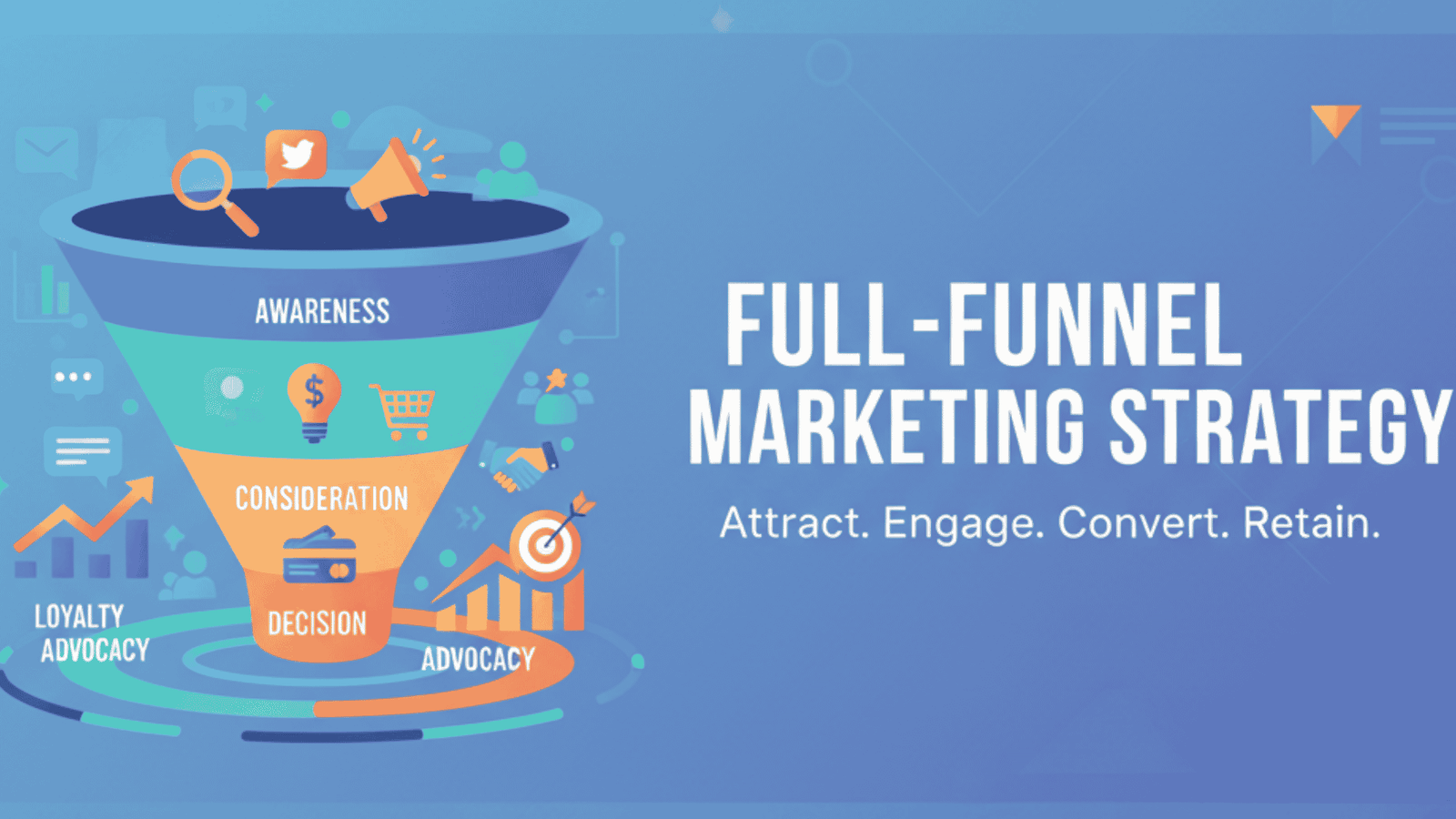
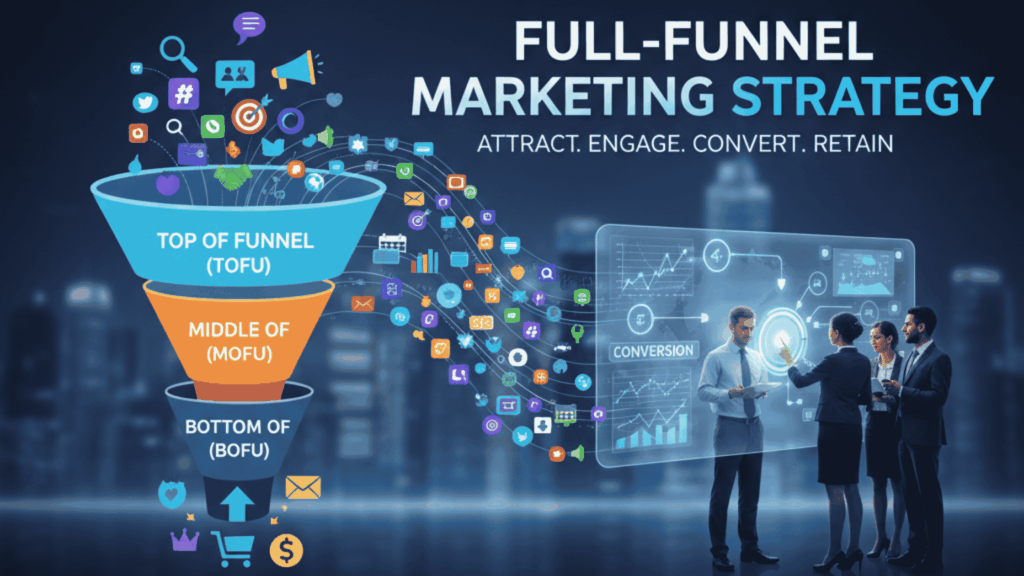
A full-funnel marketing strategy is a comprehensive approach to customer acquisition and retention that addresses every stage of the buyer’s journey. Rather than focusing solely on driving traffic or closing sales, it creates a seamless, connected experience from the moment someone becomes aware of your brand to the point where they’re singing your praises to friends and family.
The marketing funnel is traditionally broken into three broad stages:
- Top of Funnel (TOFU) — Awareness: Reaching people who don’t yet know you exist.
- Middle of Funnel (MOFU) — Consideration: Nurturing prospects who are evaluating their options.
- Bottom of Funnel (BOFU) — Decision: Converting warm leads into paying customers.
- Post-Funnel — Loyalty & Advocacy: Turning customers into brand champions who come back and refer others.
Each stage requires different messaging, different channels, and different success metrics. When all stages are working in sync, you create a marketing machine that consistently generates, nurtures, and retains customers — not just one-time buyers.
Stage 1: Awareness — Getting Found by the Right People
The top of the funnel is all about reach. At this stage, your potential customers don’t know who you are yet, and your job is to change that in the most targeted, cost-effective way possible.
Tactics That Drive Awareness
Search Engine Optimization (SEO) is the foundation of organic awareness. When someone in Charlotte searches “best digital marketing agency near me,” your website should be one of the first results they see. This requires a combination of on-page optimization, quality content, local SEO, and a strong backlink profile. SEO is a long game, but the return on investment is unmatched — organic traffic compounds over time, unlike paid advertising that stops the moment you pause your budget. Learn more about our SEO services →
Social Media Marketing puts your brand in front of audiences on the platforms they already spend time on. Whether it’s educational content on LinkedIn, engaging reels on Instagram, or community-driven posts on Facebook, consistent social media presence builds brand familiarity. Familiarity is the first step toward trust. See how we approach Social Media Marketing →
Paid Social Ads on platforms like Meta, TikTok, and LinkedIn allow you to reach hyper-targeted audiences based on demographics, interests, and behaviors — even before they’ve searched for your product or service. At the awareness stage, the goal isn’t to sell. It’s to introduce your brand to the right people and make a memorable first impression. Explore our Paid Social Ads services →
Content Creation through blog posts, videos, podcasts, and infographics establishes your authority and brings in organic search traffic. When your content answers the questions your ideal customers are already asking, you attract people who are genuinely interested in what you offer — well before they’re ready to buy. Discover our Content Creation services →
Key Awareness Metrics to Track
- Impressions and reach
- Website traffic from organic and referral sources
- Social media follower growth and reach
- Brand search volume growth
Stage 2: Consideration — Turning Strangers into Prospects
Once someone is aware of your brand, the next challenge is giving them a reason to keep paying attention. At this stage, your prospect is comparing you to competitors and asking: “Can I trust this company? Do they understand my problem? Are they the right fit?”
Your job is to answer those questions before they even have to ask.
Tactics That Drive Consideration
Website Design and UX play a massive role here. If someone visits your website and it looks outdated, loads slowly, or is hard to navigate, they’ll leave — and probably never come back. A professionally designed, mobile-first website builds immediate credibility and makes it easy for prospects to understand your offerings and take the next step. See our Website Design services →
Google Ads and PPC at this stage can target people who are actively searching for solutions to the problem you solve. Remarketing campaigns — which serve ads to people who have already visited your website — are particularly effective at re-engaging prospects who didn’t convert on their first visit. Learn about our Google Ads & PPC Management →
Email Marketing is one of the most powerful consideration-stage tools available. Once someone opts into your list, you can deliver a sequence of valuable content, case studies, testimonials, and offers that move them closer to a buying decision — at virtually zero incremental cost.
Reputation Management is the digital equivalent of word-of-mouth. A strong collection of five-star Google reviews tells a hesitant prospect that real people have had great experiences with your business. In local markets like Charlotte, reviews are often the deciding factor between you and a competitor.
Branding and Design ensures that every touchpoint — your logo, colors, messaging, and visual style — feels cohesive and professional. Consistent branding builds trust and makes your business more memorable as prospects research their options. Check out our Branding & Design services →
Key Consideration Metrics to Track
- Time on site and pages per session
- Email open rates and click-through rates
- Retargeting ad engagement
- Review quantity and average rating
Stage 3: Decision — Converting Prospects into Customers
This is where many businesses focus all of their energy — and it’s certainly important. But note how much groundwork the awareness and consideration stages have laid by the time a prospect reaches this point. If you’ve done those stages well, the decision stage becomes far less about convincing and far more about making it easy to say yes.
Tactics That Drive Conversion
Optimized Landing Pages are purpose-built pages designed to convert visitors arriving from a specific campaign. Unlike a homepage, which serves many audiences and goals, a landing page is laser-focused on one offer and one call to action. Every word, image, and button on the page is designed to get the visitor to act.
Compelling Offers and CTAs make the decision easy. Whether it’s a free consultation, a limited-time discount, a free audit, or a risk-free trial, a well-crafted offer lowers the perceived risk of taking action. Your call-to-action buttons should be specific (“Get My Free Strategy Call”) rather than generic (“Submit”).
Analytics and Reporting are essential at the decision stage to understand exactly where prospects are dropping off in the conversion process. Are they landing on your contact page but not filling out the form? Are they abandoning their cart at the shipping step? Data reveals the friction points so you can systematically remove them.
Sales Enablement Content — such as case studies, comparison guides, and ROI calculators — gives prospects the final push they need to choose you with confidence.
Key Decision Metrics to Track
- Conversion rate (leads, sales, bookings)
- Cost per acquisition (CPA)
- Lead-to-customer close rate
- Revenue attributed to specific campaigns
Stage 4: Loyalty and Advocacy — The Stage Most Businesses Ignore
Here’s a statistic every business owner should internalize: it costs five to seven times more to acquire a new customer than to retain an existing one. Yet most marketing strategies treat the customer relationship as ending at the point of sale.
The post-purchase experience is where the most profitable marketing happens — and the most overlooked. When you invest in customer loyalty, you unlock the most powerful growth lever available: word-of-mouth referrals.
Tactics That Build Loyalty and Drive Advocacy
Ongoing Email Marketing keeps your brand top of mind after the sale. Newsletters, product updates, exclusive offers, and birthday emails all remind customers why they chose you and give them reasons to come back.
Loyalty Programs and Exclusive Perks reward your best customers and give them a sense of belonging to something exclusive. Whether it’s a points system, a referral program, or VIP access to new products, these programs dramatically increase customer lifetime value.
Proactive Reputation Management means asking satisfied customers to leave reviews at the right moment — usually shortly after a positive interaction. This turns happy customers into visible advocates who influence future buyers.
Social Media Community Building transforms your brand’s social presence from a broadcasting channel into a two-way conversation. When customers feel seen and heard, they become vocal supporters who organically promote your brand in their networks.
Consulting and Strategy sessions with existing clients help them get more value from your services, which deepens the relationship and makes churn far less likely.
Key Loyalty Metrics to Track
- Customer retention rate
- Net Promoter Score (NPS)
- Customer lifetime value (CLV)
- Referral traffic and referral-sourced revenue
How to Integrate Your Full-Funnel Strategy
A full-funnel strategy isn’t a set of disconnected campaigns — it’s a unified system where each stage feeds the next. Here’s how to tie it all together:
1. Define your audience personas clearly. Know exactly who you’re targeting at each stage. Your awareness campaigns reach cold audiences; your remarketing targets warm ones; your retention emails speak to existing customers. Each needs its own messaging.
2. Map content to funnel stages. Blog posts and social media educate (TOFU). Case studies and email sequences nurture (MOFU). Landing pages and offers convert (BOFU). Loyalty programs and personalized outreach retain (Post-Funnel).
3. Use data to close the loop. Your analytics should connect the dots between every stage so you can see which awareness channels produce the highest-quality leads, not just the most traffic. Attribution modeling helps you allocate budget where it truly matters.
4. Align your channels. Your SEO, paid ads, social media, and email marketing should tell a consistent brand story. A prospect who sees your Instagram ad, reads your blog, and then receives a follow-up email should feel like they’re interacting with the same brand at every touchpoint.
5. Test, optimize, and iterate. A full-funnel strategy is never “finished.” Run A/B tests on your landing pages, subject lines, and ad creatives. Review your funnel metrics monthly. Double down on what’s working and fix what isn’t.
Why Charlotte Businesses Need a Full-Funnel Approach in 2026
The Charlotte market is one of the fastest-growing in the Southeast. More businesses are competing for the same customers, which means the cost of acquiring attention is rising. Businesses that only invest in bottom-of-funnel tactics — like Google Ads alone — are fighting over a shrinking pool of ready-to-buy prospects and paying a premium for every click.
Businesses that build full-funnel strategies, on the other hand, are building audiences, nurturing relationships, and creating the kind of brand trust that makes customers choose them even when a competitor is offering a lower price.
At Queen City Digital, we build custom full-funnel marketing strategies for businesses across Charlotte, from local service businesses to regional brands looking to scale. Contact us today to start building your full-funnel strategy →
Frequently Asked Questions (FAQs)
Q1: What is the difference between full-funnel marketing and traditional marketing?
Traditional marketing often focuses on a single stage — typically driving awareness or pushing for immediate sales. Full-funnel marketing takes a holistic view, addressing every stage of the buyer’s journey from first impression to long-term loyalty. This approach results in more consistent growth because it prevents potential customers from falling through the cracks between stages.
Q2: How long does it take to see results from a full-funnel marketing strategy?
The timeline varies depending on the channels used and your starting point. Paid campaigns (Google Ads, Paid Social) can drive results within days or weeks. SEO and content marketing typically take three to six months to build meaningful momentum. Email marketing and loyalty programs show results over months and years as your audience grows. The key is to view full-funnel marketing as an investment that compounds over time, not a quick fix.
Q3: How much should I budget for a full-funnel marketing strategy?
Budget depends on your industry, competitive landscape, and growth goals. As a general rule, businesses should allocate 7–10% of revenue to marketing, with higher percentages for businesses in growth mode. A balanced full-funnel budget spreads investment across awareness (SEO, content, paid social), consideration (email, retargeting, website), and conversion (PPC, landing page optimization) channels. We’re happy to help you build a custom budget during a strategy consultation.
Q4: Can small businesses benefit from a full-funnel strategy?
Absolutely. In fact, full-funnel strategies can level the playing field for small businesses. While you may not be able to outspend a large competitor, you can out-nurture them. A small business that builds strong local SEO, a compelling website, an active email list, and an excellent reputation will consistently outperform a larger, less strategic competitor.
Q5: Which funnel stage should I prioritize first?
If you’re starting from scratch, begin by ensuring your foundation is solid: a professional website, consistent branding, and basic SEO. Then layer in awareness tactics to drive traffic, consideration tactics to nurture that traffic, and conversion optimization to turn visitors into customers. Loyalty strategies can be activated even with a small customer base — the sooner you start, the better.
Q6: How do I measure the success of my full-funnel marketing strategy?
Each stage has its own KPIs. Awareness is measured by reach, impressions, and organic traffic growth. Consideration is measured by engagement rates, email open rates, and time on site. Conversion is measured by leads, sales, and cost per acquisition. Loyalty is measured by retention rate, repeat purchase frequency, and Net Promoter Score. A robust analytics and reporting setup ties all of these together so you can see the big picture. Learn more about our Analytics & Reporting →
Q7: Do I need a digital marketing agency to run a full-funnel strategy?
You can manage some elements in-house, but a full-funnel strategy involves multiple disciplines — SEO, paid advertising, content creation, email marketing, web design, and analytics — all working in sync. Most businesses find that partnering with an experienced agency is more cost-effective than hiring specialists for each discipline, and it ensures that all channels are aligned toward the same goals.