


The way people search for information online is changing faster than at any point in the past two decades. For most of the internet’s history, search meant typing a query into Google and scanning a list of blue links. Today, a growing number of searches never produce a list of links at all. Instead, an AI engine reads your question, synthesizes information from dozens of sources, and delivers a direct, conversational answer — often without the user clicking on a single website.
This shift is called Generative Engine Optimization (GEO), and it represents one of the most significant changes to digital marketing since mobile search overtook desktop a decade ago. For business owners in Charlotte and across North Carolina, understanding this shift — and taking action now — is the difference between being cited as a trusted source by AI engines or becoming invisible to a rapidly growing segment of your audience.
This guide explains exactly what AI search optimization is, why it matters for your business in 2026, and the concrete steps you can take today to make sure your website earns visibility in the new era of generative search.
What Is Generative Engine Optimization (GEO)?
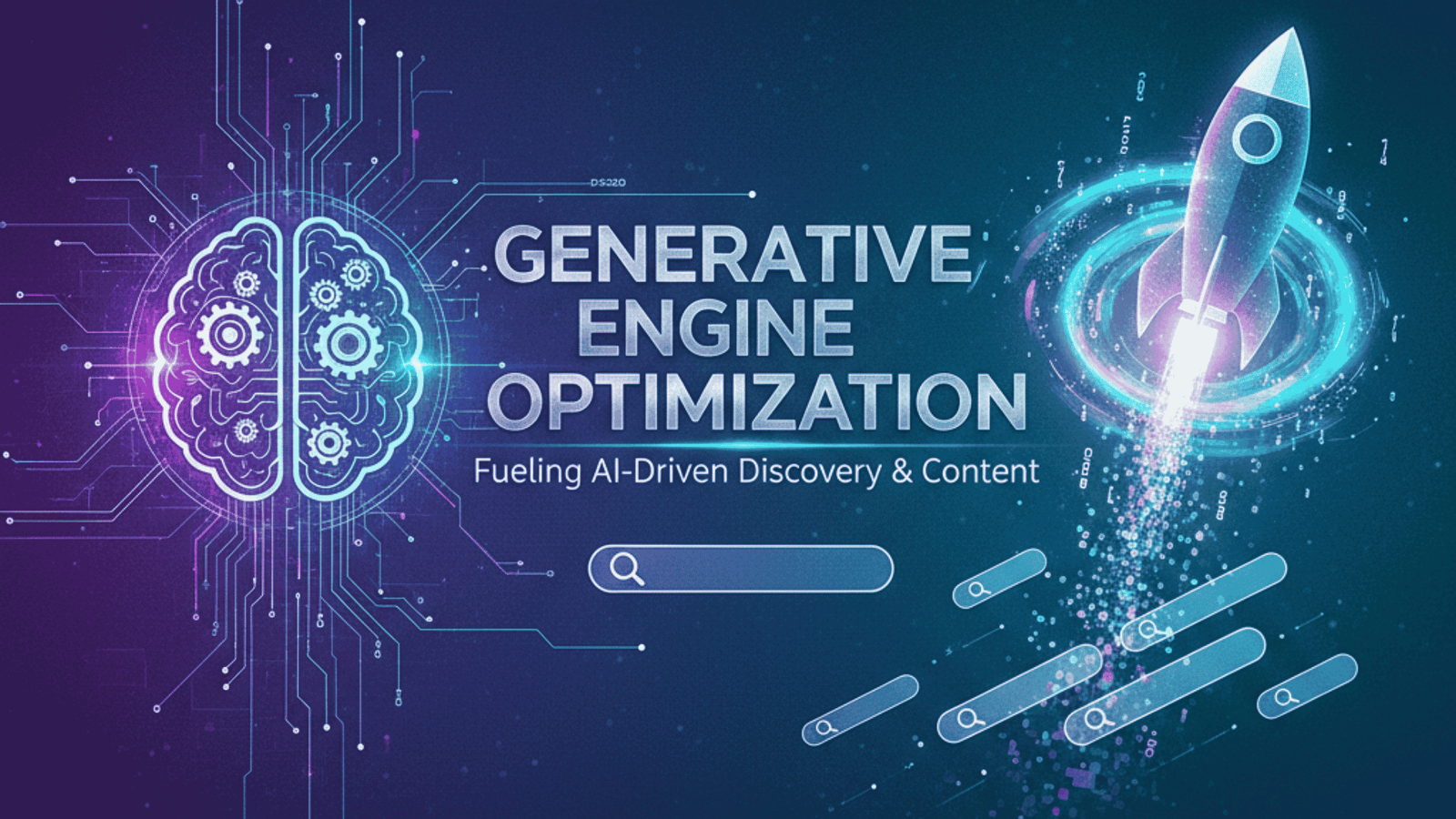
Generative Engine Optimization is the practice of structuring, writing, and presenting your website content in ways that make it more likely to be understood, trusted, and cited by AI-powered search tools.
These tools include Google’s AI Overviews — the AI-generated summaries that now appear at the top of many Google search results — as well as standalone AI engines like ChatGPT (which launched a search feature and now handles hundreds of millions of queries), Perplexity AI, Microsoft Copilot, and others that are gaining traction rapidly.
Unlike traditional search engines that rank a list of pages, generative engines synthesize content from multiple sources and produce a single, integrated answer. The sites that get referenced inside those answers — and the ones that get linked as “sources” — receive the most valuable new form of organic visibility on the internet.
Here’s the critical point for business owners: if your website isn’t structured in a way that AI engines can easily parse, trust, and cite, you are already being left out of conversations your potential customers are having right now.
Why AI Search Matters for Charlotte Businesses Right Now
You might be thinking: most of my customers still use Google the traditional way. That’s true for now — but the numbers are shifting quickly.
Google has reported that AI Overviews now appear in a significant percentage of searches, and user adoption of tools like ChatGPT for research and decision-making continues to accelerate. More importantly, the users who are adopting AI search tools first tend to be exactly the kind of high-intent, research-driven buyers that most businesses most want to reach.
For service-based businesses, professional firms, healthcare practices, contractors, and local retailers throughout the Charlotte metro area, showing up as a cited, trusted source in an AI-generated answer isn’t a distant future concern — it’s a present-day competitive advantage that most of your local competitors aren’t thinking about yet.
The businesses that optimize for generative engines now will have a significant head start when AI-assisted search becomes the dominant behavior across all demographics.
How Generative Engines Decide What to Cite
Understanding how AI search engines select and reference sources is the foundation of effective GEO. While the exact algorithms differ between tools, several core principles apply across all major generative engines.
Trustworthiness and Authority
AI engines prioritize sources that demonstrate strong E-E-A-T signals — Experience, Expertise, Authoritativeness, and Trustworthiness. This means your website needs to clearly communicate who you are, what qualifies you to speak on your topic, and why users should trust your information.
Practically, this means having a detailed About page that showcases your team’s credentials and experience, publishing content attributed to real named authors with verifiable expertise, earning mentions and backlinks from credible third-party sources, and maintaining consistent, accurate business information across the web.
Content Clarity and Structure
Generative AI engines process and synthesize content in ways that favor pages with clear, well-organized information. Content that uses direct answers, logical headings, and explicit statements tends to get pulled into AI responses more readily than vague, jargon-heavy writing.
Think about how an AI engine would read your service page. Does it clearly state what you do, who you serve, where you’re located, and why you’re qualified? Or does it lead with clever marketing copy that sounds great to a human but tells an AI engine very little?
Factual Accuracy and Specificity
AI engines favor content that contains specific, verifiable facts over generic claims. A page that says “we’ve helped over 200 Charlotte businesses increase their revenue” is far more citable than one that says “we deliver exceptional results for our clients.” Data points, statistics, named locations, and concrete outcomes make your content both more credible to human readers and more useful to AI engines looking for specific information to include in answers.
Freshness and Relevance
Generative engines, especially those with real-time web access, favor content that is current, regularly updated, and directly relevant to the query being answered. Stale content published years ago and never updated signals low priority. Regularly published, current content signals an active, authoritative source.
8 Practical Steps to Optimize Your Website for Generative Search
1. Write Content That Answers Specific Questions Directly
AI engines are designed to answer questions. Your content should be too. Identify the real questions your potential customers are typing and speaking — “what is the best digital marketing agency in Charlotte,” “how much does SEO cost for a small business,” “what does a website redesign include” — and build content that answers each one directly, completely, and in plain language.
This is a fundamental shift from writing for keywords to writing for intent. The content that AI engines cite most readily is content that gets to the answer quickly and clearly.
At Queen City Digital, our content creation services are built around exactly this principle — producing content that answers your audience’s real questions in ways that both humans and AI engines trust and reference.
2. Implement Structured Data Markup (Schema)
Schema markup is code added to your website that explicitly tells search engines — and AI engines — what your content is about, who wrote it, what your business does, where you’re located, and much more. It’s one of the single highest-leverage technical steps you can take for GEO.
For local businesses in Charlotte, the most important schema types to implement include LocalBusiness schema (with your full NAP details), Service schema for each service you offer, FAQ schema for question-and-answer content, Article schema for blog posts, and Review schema to surface your ratings in search results.
Our technical SEO services include full schema implementation as part of every SEO engagement, ensuring AI engines can clearly understand your business and its offerings.
3. Build a Strong E-E-A-T Foundation
Every page of your website should reinforce your authority and trustworthiness. Make sure your About page prominently features your team, their backgrounds, years of experience, and any credentials or certifications. Attribute blog posts and articles to named authors with a short bio. Display client testimonials, case studies, and results prominently throughout your site.
For local businesses, community involvement, press mentions, award recognitions, and professional association memberships all contribute to E-E-A-T signals that generative engines evaluate when deciding whether to cite your content.
4. Optimize Your Google Business Profile
Your Google Business Profile is one of the most important signals for appearing in AI-generated local search answers. In 2026, Google’s AI Overviews for local queries draw heavily from GBP data — your category, services, hours, photos, Q&A section, and reviews all feed directly into how you’re represented in AI-generated local results.
Keep your profile fully completed, post updates regularly, respond to every review, and make sure your business description includes the specific services and locations you serve. Pair this with our local SEO strategy for North Carolina businesses to maximize your local AI search presence.
5. Use Conversational, Natural Language in Your Content
Traditional SEO often pushed writers toward slightly unnatural keyword-dense prose. GEO favors the opposite: clear, natural, conversational writing that mirrors how real people speak and ask questions. This isn’t just about matching voice search queries — it’s about producing the kind of readable, accessible content that AI engines can confidently extract and paraphrase in a generated answer.
Write for a knowledgeable friend explaining something clearly, not for a keyword density tool.
6. Earn High-Quality Backlinks and Brand Mentions
The off-page signals that have always driven traditional SEO authority also drive GEO authority. AI engines use backlink profiles and brand mentions as trust signals. When reputable websites in your industry, your city, or your niche reference your business or link to your content, it signals to generative engines that you are a credible, authoritative source worth citing.
This means digital PR, guest posting on industry publications, pursuing local press coverage, and building genuine relationships with complementary businesses remain just as important in the AI search era as they were before it.
Our on-page and off-page SEO approach covers the full spectrum of authority-building strategies that feed both traditional and generative engine rankings.
7. Optimize for Featured Snippets and Direct Answers
Featured snippets — the boxed answers that appear at the very top of Google results — are closely related to what gets pulled into AI Overviews. Pages that already earn featured snippets for their target queries are significantly more likely to be cited in AI-generated answers for related queries.
To earn featured snippets, structure your content so that definitions, lists, and direct answers appear in clean, clearly formatted sections. Use concise paragraph answers (40 to 60 words) for “what is” queries. Use numbered lists for “how to” queries. Use comparison tables for “X vs. Y” queries.
8. Ensure Fast, Mobile-First Technical Performance
Generative engines don’t just evaluate content — they evaluate the entire user experience your website delivers. Slow-loading pages, broken links, poor mobile layouts, and crawl errors all signal low quality. A technically clean, fast, mobile-optimized website is the prerequisite for everything else in your GEO strategy.
Review our complete Technical SEO Checklist to make sure your site’s foundation is solid before layering in advanced GEO tactics.
The Relationship Between Traditional SEO and GEO
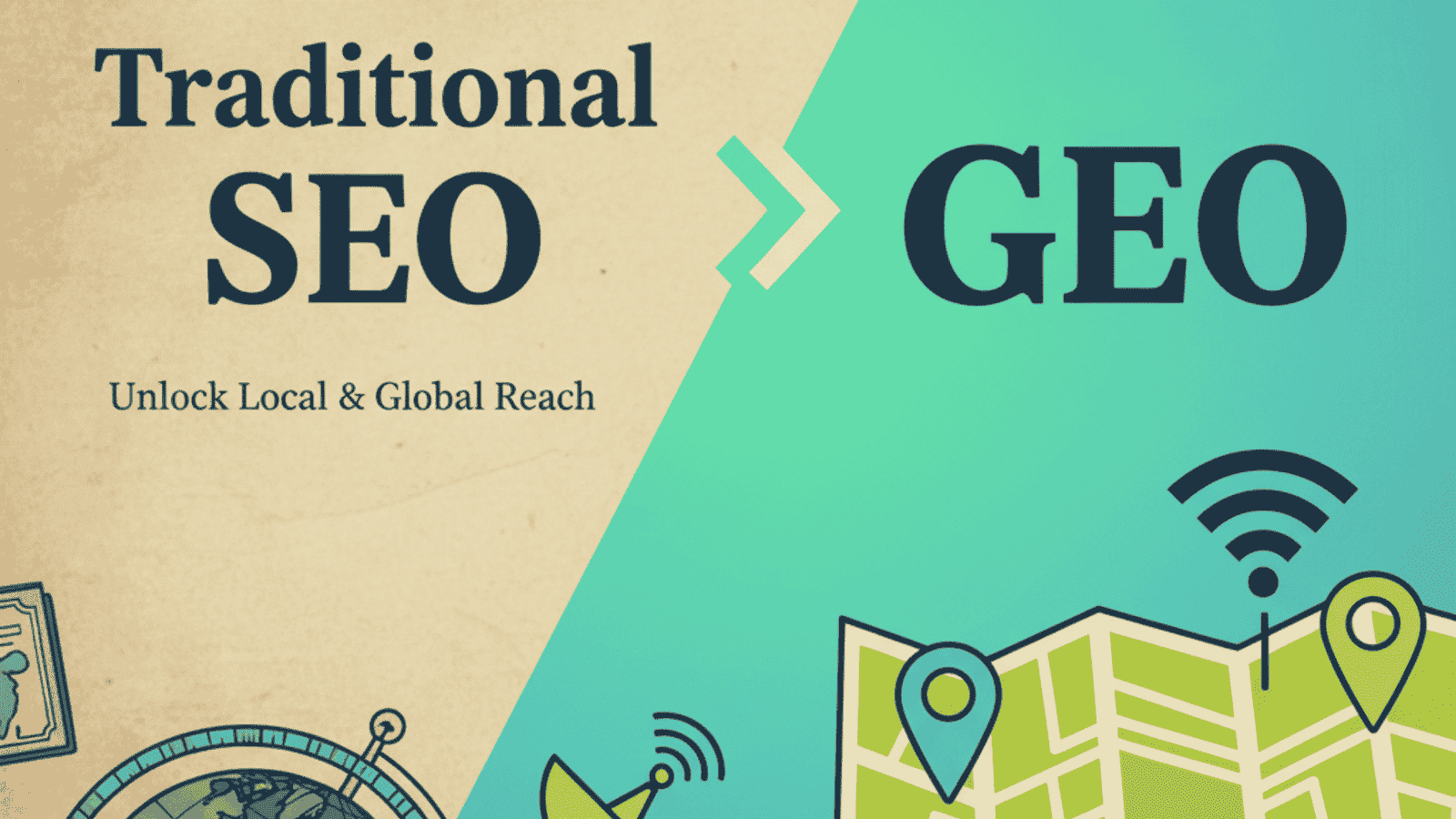
It’s important to understand that GEO is not a replacement for traditional SEO — it’s an evolution of it. Almost everything that has always made a website rank well in traditional search also makes it more likely to be cited by generative engines. High-quality content, strong technical fundamentals, authoritative backlinks, and local optimization all carry over.
What GEO adds is an emphasis on clarity, structure, direct answers, and demonstrated expertise that goes beyond keyword targeting. The websites that will win in 2026 and beyond are those that combine the best of both: technically sound, well-linked sites with genuinely expert content that is organized to answer real questions directly and transparently.
What This Means for Your Content Strategy
The shift toward generative search has one major strategic implication for your content calendar: depth and specificity beat volume and breadth.
Publishing one comprehensive, well-researched, clearly structured guide on a topic your audience genuinely cares about will generate more AI citations — and more qualified traffic — than publishing ten thin, generic blog posts on loosely related subjects. In the age of AI content saturation, the websites that earn AI citations are the ones that bring something original, authoritative, and genuinely useful to the table.
For Charlotte businesses, this means investing in content that demonstrates real local knowledge — specifics about your market, your community, your clients’ challenges — alongside technical expertise in your field. That combination of geographic specificity and topical authority is exactly what differentiates a locally trusted business from an anonymous website in AI search results.
Our consulting and strategy services help Charlotte businesses develop content roadmaps built for generative engine visibility — identifying the exact questions your audience is asking AI tools and building content designed to answer them better than anyone else in your market.
Frequently Asked Questions
Q: What is the difference between traditional SEO and Generative Engine Optimization (GEO)?
A: Traditional SEO focuses on ranking your pages in a list of search results so users click through to your site. GEO focuses on getting your content cited, referenced, or summarized inside AI-generated answers — a form of visibility that doesn’t always require the user to click at all, but positions your brand as a trusted authority in your field.
Q: Do I need to start over with my website to optimize for AI search?
A: Not at all. Most of the fundamentals that make a website perform well in traditional SEO — quality content, fast load times, strong backlink profile, accurate local information — also lay the groundwork for GEO. The additional steps involve improving content structure, adding schema markup, strengthening E-E-A-T signals, and aligning your content more directly with the questions your audience asks AI tools.
Q: Which AI search tools should I be optimizing for?
A: In 2026, the most important generative engines to optimize for are Google’s AI Overviews (which appear directly in Google Search), ChatGPT with browsing enabled, Perplexity AI, and Microsoft Copilot. Google AI Overviews should be the first priority for most businesses given Google’s continued dominance in total search volume.
Q: How does my Google Business Profile affect AI search results?
A: Your Google Business Profile is a primary data source for Google’s AI Overviews in local search queries. A fully optimized, regularly updated profile with accurate service details, fresh photos, and a strong review base significantly increases your chances of appearing in AI-generated local answers.
Q: How long does it take to see results from GEO efforts?
A: GEO is a medium to long-term strategy. Structural improvements like schema markup and content restructuring can show results within weeks. Building the E-E-A-T authority and backlink profile that generative engines favor is a 3 to 6 month process at minimum for competitive markets. That said, businesses that begin now are well ahead of those who wait.
Q: Can small businesses in Charlotte compete with national brands in AI search?
A: Yes — and in some cases, local businesses have an advantage. AI engines prioritize geographic relevance for local queries, and a Charlotte business with strong local signals, genuine community authority, and well-structured content about Charlotte-specific topics can absolutely outperform national competitors who lack that local depth.
Q: How does Queen City Digital help businesses optimize for AI search?
A: We integrate GEO principles across all of our SEO engagements — from schema implementation and content strategy to E-E-A-T development and local authority building. Whether you’re starting from scratch or looking to adapt an existing strategy to the new search landscape, we build a complete approach tailored to your business, your industry, and your Charlotte-area market. Get in touch today to start the conversation.
Get Ahead of the AI Search Revolution
The businesses appearing in AI-generated answers six months from now are the ones building their authority today. AI search optimization is not a trend to watch — it’s a strategy to implement now, while most of your local competitors are still focused exclusively on traditional ranking tactics.
At Queen City Digital, we help Charlotte businesses stay ahead of every major shift in digital marketing — from local SEO dominance to generative engine visibility. Schedule your free strategy call today and let’s make sure your business gets found, wherever your customers are searching.